Partnering with Indigenous Nations
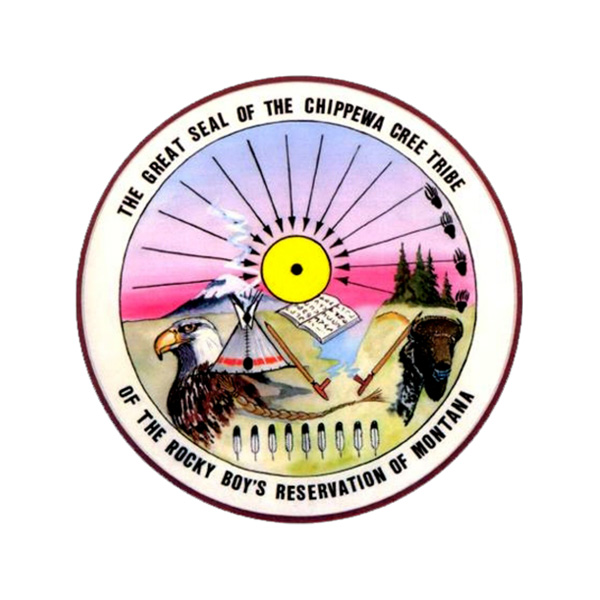
The Montana Historical Society is committed to building relationships with our neighboring Indigenous Nations, honoring Tribal sovereignty and building respectful, ongoing partnerships with the thirteen sovereign nations in Montana: the Blackfeet Nation, Crow Nation, Little Shell Tribe of Chippewa Indians, Confederated Salish, Pend d’Oreille & Kootenai Tribes, Northern Cheyenne Tribe, Gros Ventre & Assiniboine Tribes of Fort Belknap, Assiniboine & Sioux Tribes of Fort Peck, and the Chippewa & Cree Tribe of Rocky Boy’s Reservation.
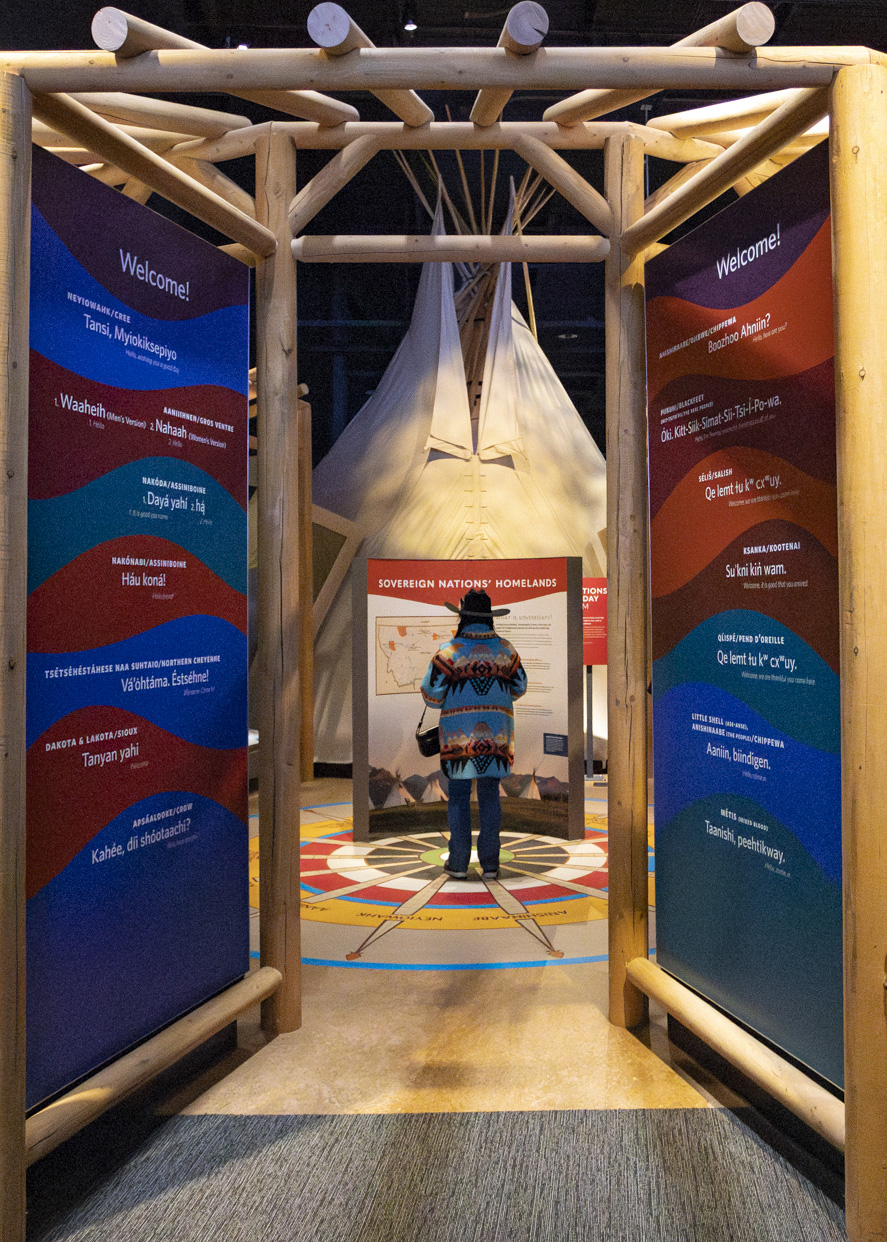
Indigenous content within the museum was, and continues to be, created through direct collaboration with these Tribal Nations. Leadership from each reservation appointed a cultural advisor to guide how their histories, cultures, and contemporary stories are presented. These advisors shaped exhibit themes, selected objects and images, reviewed language and interpretation, and ensured that Indigenous knowledge is shared accurately, respectfully, and responsibly.
This collaborative approach recognizes that Indigenous peoples are the rightful authorities over their own histories and cultural heritage. By centering Native voices, perspectives, and expertise, the Montana Historical Society seeks to present a more complete, truthful, and inclusive history of Montana.
Together, we work to protect artifacts, cultural sites, preserve historical knowledge, and share living traditions for present and future generations. These partnerships ensure that the stories told here reflect the strength, resilience, and continuity of Montana’s sovereign nations, and affirm that Montana’s history cannot be fully understood without honoring Indigenous knowledge, leadership, and lived experience.
The Tribal Stakeholders Group
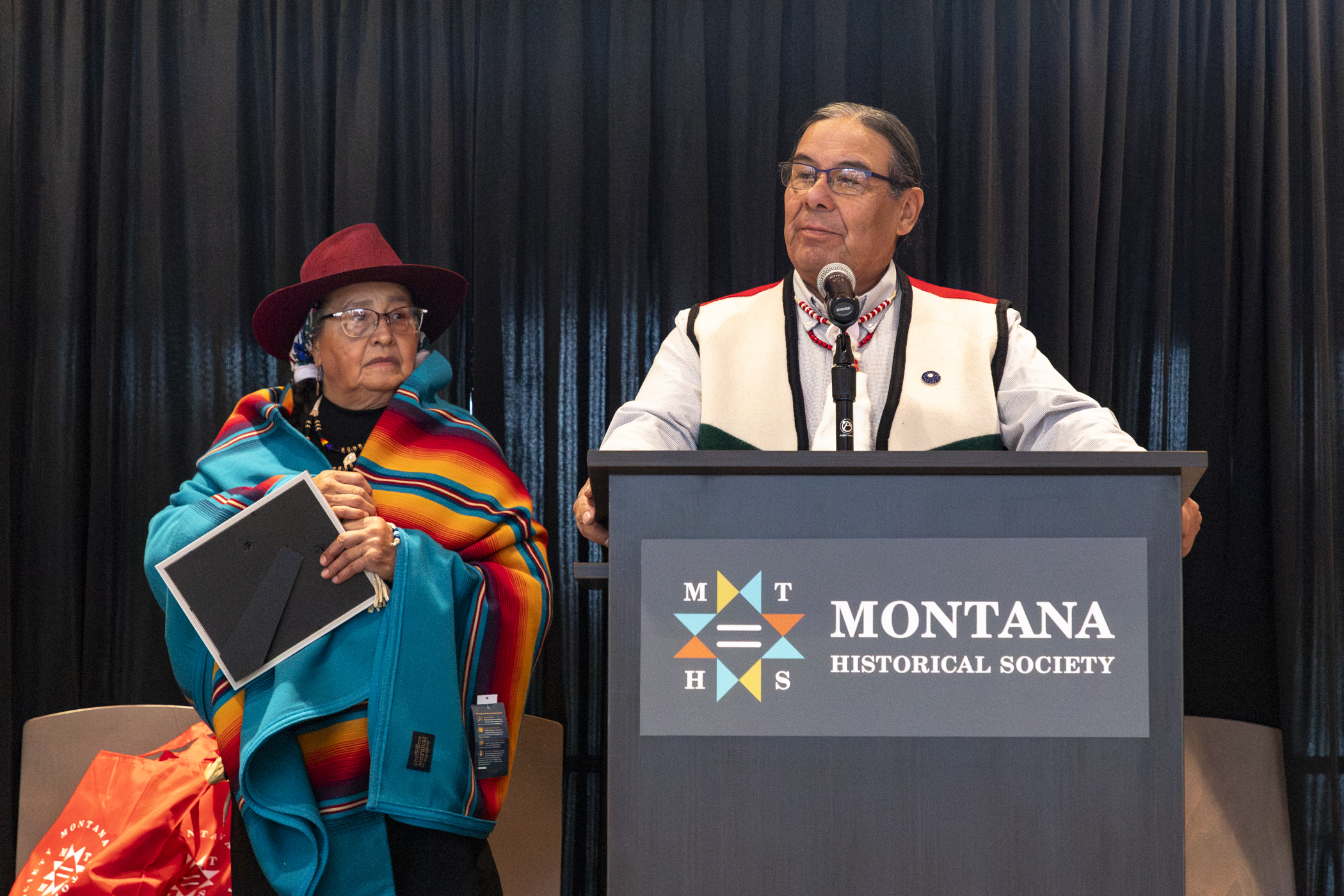
We would like to thank the thirteen Indigenous Nations who worked closely with us through their governmental leadership, Tribal Historic Preservation Offices, and their communities. It is through these officials and community members that we were able to produce respectful and accurate Indigenous interpretation throughout the Montana Heritage Center.
Smudge Room at the Montana Heritage Center

Smudging is a blessing, healing, and cleansing practice that stems from Indigenous knowledge systems. People smudge when they are participating in a blessing, ceremony or a spiritually significant event, and when they are experiencing hardship or negativity, in need of healing or cleansing, to sustain joy and love, and sometimes simply to give thanks.
Native people recognize smudging as a purifying, cleansing, and healing tool. Many Indigenous Nations understand that smudging has the power to alleviate physical and emotional pain, spiritual disconnectedness, sadness, and anxiety.
The physcal act of smudging involves the placement of the dried plant (sage, cedar, bear root, sweetgrass, or sweet pine) into a fireproof container, which is then lit with a match. Once the plant catches fire the flames are blown out, and the smoke is carefully waved over the person, place, or item in need of a blessing with a hand or eagle fan. The person being smudged brings the smoke toward themselves to receive the cleansing and blessing. There are prayers that are said before, during, and after the smudging. Once completed the ashes are returned to the earth’s soil.
In this space, cedar, sweetgrass, sage, bear root, and sacred tobacco are used to purify, respect, and protect the sacred and sensitive items that are in the care of the museum, those who care for them, and those who come to visit them.
At the Montana Historical Society, the act of smudging is acknowledged, encouraged, and respected. We support and protect the healing and spiritual rights of our Indigenous relatives.
Smudging gives us the power to promote wellbeing, good health, strength, courage, wisdom, knowledge, and a long life. It is our way of connecting to Creator, our Higher Power. —Darnell Rides at the Door (Piikuni)
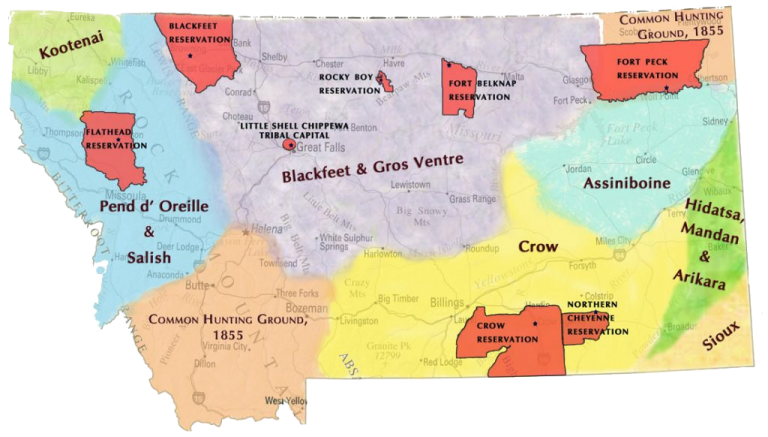
Indigenous Partner Websites
Land Acknowledgement
The Montana Historical Society respectfully acknowledges that the Montana Heritage Center and the state we serve rests upon the ancient ancestral lands of the Piikuni (Blackfeet), Apsáalooke (Crow), Séliš (Salish), Ksanka (Kootenai), Ql̓ispé (Pend d’Oreille/Kalispel), Nakoda (Assiniboine), Aaniiihnen (Gros Ventre), Dakota and Lakota (Sioux), Tsétsėhéstȧhese naa Suhtaio (Northern Cheyenne), Anishinaabe (Chippewa), Neyiowahk (Cree), Anishinaabe and Métis (Little Shell Chippewa), Newe (Shoshone and Bannock), Sosoni (Eastern Shoshone), and Nimiipuu (Nez Perce).
We honor the manner in which these sacred lands have provided for the physical and spiritual well-being of countless Indigenous people throughout history. We are committed to honoring the rich history of the Indigenous nations who call this land home and to collaborating with them to further understand our shared history.